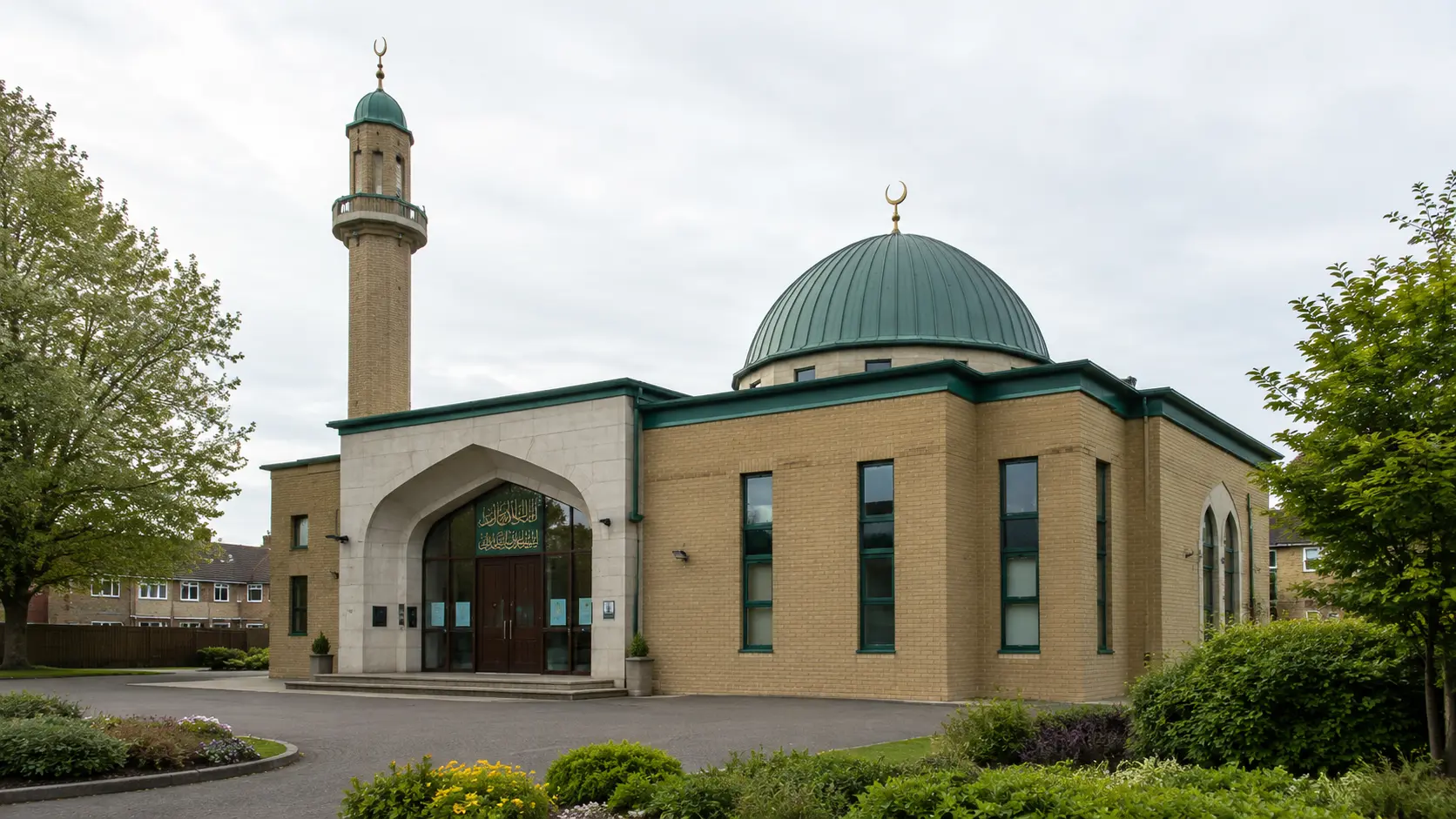
Muslim funerals are guided by Islamic law and carried out with care and speed — burial as soon as possible after death is considered an obligation of the community towards the deceased. The service is dignified, structured, and centred on prayer and the will of God. This guide covers what to expect if you are attending or helping to arrange a Muslim funeral. Practices can vary by community and cultural background; the family’s imam or mosque can advise on anything specific.
Timing
Islam requires burial as soon as practically possible — ideally within 24 hours of death. In the UK, registering the death and obtaining the necessary documentation means this is often 48–72 hours in practice. If the family chooses repatriation — returning the body to the country of origin — this typically takes 3–7 days and involves specialist funeral directors.
Preparation of the body
The body undergoes ghusl (غُسْل — ritual washing), performed by same-gender family members or trained community volunteers, usually at the mosque’s facilities. The body is washed an odd number of times (at minimum three), with the right side washed first. Fragrance — typically camphor — may be applied afterwards.
The washed body is wrapped in kafan (كَفَن — burial shroud) of plain white cotton or linen. For men, this is traditionally three pieces; for women, five. The simplicity of the kafan reflects the Islamic principle of equality in death. Embalming is generally avoided, though it may be required for repatriation.
Cremation
Cremation is strictly forbidden in Islam. The body must be buried in the ground — this is a firm position across Sunni and Shia schools of Islamic jurisprudence.
The funeral prayer
Salat al-Janazah (صَلَاة الجَنَازَة — the funeral prayer) is a collective religious duty. It may be performed at the mosque, graveside, or in a designated outdoor prayer area, and is led by an imam (إِمَام).
It is performed entirely standing — unlike daily prayers, there is no bowing or prostration. It consists of four takbirs (تَكْبِيرَات — declarations of “Allahu Akbar,” God is Greatest):
- After the first: silent recitation of Al-Fatiha (the opening chapter of the Qur’an)
- After the second: salutations upon the Prophet Muhammad (ﷺ)
- After the third: supplication (du’a) for the deceased
- After the fourth: a brief closing supplication, then the salaam
The congregation stands in rows facing Mecca. Women may attend — this is well-established in Islamic practice, though arrangements vary by mosque.
The burial
The body is placed in the grave on its right side, facing the qibla — the direction of Mecca. From the UK, this is approximately south-southeast. Ideally the body is buried in its shroud without a coffin, to allow natural decomposition; where UK burial regulations require it, a plain wooden coffin is used. Dedicated Muslim burial grounds and some local authority cemeteries with Muslim sections provide graves oriented correctly towards Mecca.
Excessive displays of grief — wailing or shrieking — are discouraged; quiet tears are natural and permitted. The phrase most commonly recited on news of a death is Inna lillahi wa inna ilayhi raji’un (إِنَّا لِلَّهِ وَإِنَّا إِلَيْهِ رَاجِعُونَ) — “We belong to God and to Him we shall return.”
Mourning period
General mourning lasts three days — a period for prayer, receiving condolences, and avoiding celebrations. The widow observes iddah (عِدَّة) — a mourning and waiting period of four months and ten days, during which she remains in the matrimonial home and avoids remarriage. This derives from the Qur’an (Surah al-Baqarah, 2:234).
Ongoing remembrance includes recitation of Qur’anic passages and charitable acts (sadaqah) in the name of the deceased. In many South Asian Muslim communities, gatherings on the 3rd, 7th, and 40th days after death are held as cultural custom, though these are not a strict religious requirement.
If you are attending
Dress modestly — women should cover their hair. Remove shoes if entering the mosque or prayer area. Do not extend a hand to shake unless the other person does so first. Follow the lead of those present. If you are not Muslim, standing quietly during the prayers is entirely appropriate.
For more in the series, see our guides to Jewish funerals, Hindu funerals, Sikh funerals, and see our guides to cremation, traditional burial, and humanist funerals.
We create bespoke orders of service for funerals of all kinds. Send us a message or call free on 0800 612 6484.