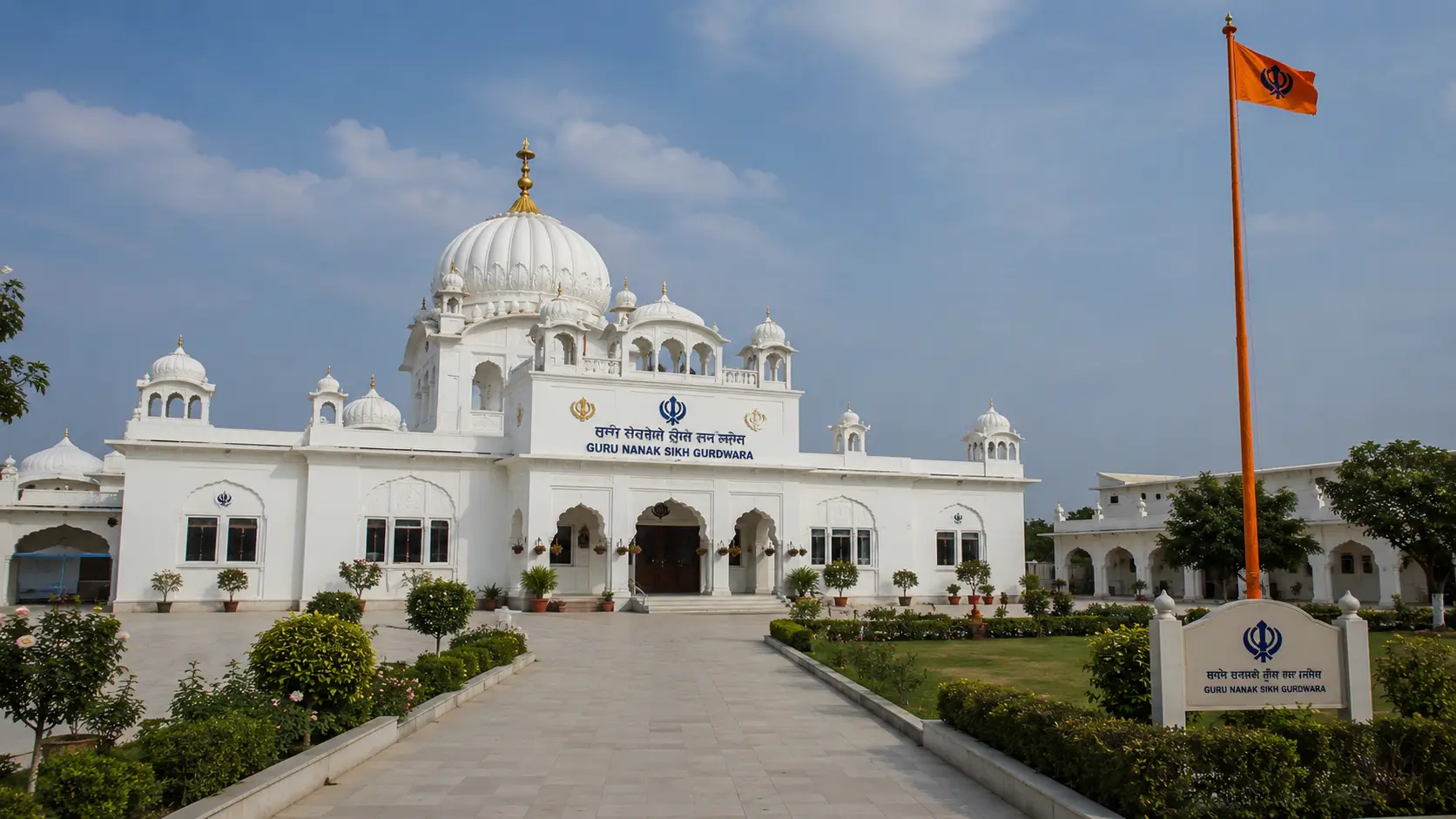
Sikh funeral rites reflect a central belief of the faith: that death is God’s will (Hukam), and that the soul continues its journey beyond the body. The service is one of acceptance, prayer, and communal support — not of excessive grief. This guide explains what to expect at a Sikh funeral. The family’s Granthi (the reader of the Guru Granth Sahib Ji) or the local Gurdwara can advise on anything specific to the family’s arrangements.
Timing
There is no strict 24-hour requirement, but cremation is arranged promptly — typically within three to five days, allowing time for family to travel. UK documentation requirements (registering the death, obtaining a cremation certificate) are accommodated within this.
Preparation of the body
The body is washed by family members of the same gender. If the deceased was Amritdhari — initiated into the Khalsa (the community of committed Sikhs) — they are dressed in the Panj Kakars (ਪੰਜ ਕਕਾਰ — the Five Ks, the articles of Sikh faith):
- Kesh (ਕੇਸ) — uncut hair, combed and covered with a turban or chunni
- Kangha (ਕੰਘਾ) — a small wooden comb placed in the hair
- Kara (ਕੜਾ) — a steel bracelet on the right wrist
- Kachera (ਕਛਹਿਰਾ) — a cotton undergarment
- Kirpan (ਕਿਰਪਾਨ) — a small steel blade worn in a cloth sheath
Non-Amritdhari Sikhs are dressed in clean clothing, typically with a turban for men. Embalming is not practised. Flowers and incense are commonly present.
Cremation
Cremation is the universal Sikh practice, consistent with the belief that the physical body is a temporary vessel for the soul. Ashes are scattered in flowing water — in the UK, a river or the sea; many families take ashes to rivers in the Punjab.
The service (Antam Sanskar)
The Sikh funeral is called Antam Sanskar (ਅੰਤਮ ਸੰਸਕਾਰ — “last rite of passage”). It is held at the Gurdwara (ਗੁਰਦੁਆਰਾ — “gateway to the Guru,” the Sikh place of worship) or at the crematorium. All attendees cover their heads; shoes are removed at the Gurdwara.
Key elements:
- Kirtan (ਕੀਰਤਨ) — devotional singing of hymns (shabads) from the Sri Guru Granth Sahib Ji, the eternal Sikh scripture treated as the living Guru, performed by musicians (ragis) or family members
- Japji Sahib (ਜਪੁਜੀ ਸਾਹਿਬ) — a foundational prayer by Guru Nanak, recited at the funeral
- Ardas (ਅਰਦਾਸ) — the communal Sikh prayer, recited standing with hands folded; it opens and closes the service and is offered for the soul of the deceased
- Hukamnama (ਹੁਕਮਨਾਮਾ) — a random reading from the Sri Guru Granth Sahib Ji, taken as divine guidance for the occasion
- Kirtan Sohila (ਕੀਰਤਨ ਸੋਹਿਲਾ) — the Sikh night prayer, composed of five hymns, recited at the cremation
- Antim Ardas (ਅੰਤਿਮ ਅਰਦਾਸ — “final Ardas”): the closing prayer offered specifically for the soul of the deceased
Short eulogies or reflections are permitted but should be measured. Excessive public displays of grief are discouraged as inconsistent with the Sikh acceptance of God’s will.
At the crematorium
Prayers and kirtan continue at the cremation itself. The nearest family member typically presses the cremator button — equivalent to the traditional act of lighting the funeral pyre. A final Ardas is offered at the crematorium.
The scripture reading
After the funeral, the family undertakes a complete reading of the Sri Guru Granth Sahib Ji (1,430 pages). This may take the form of an Akhand Path (ਅਖੰਡ ਪਾਠ — “unbroken reading”): a continuous relay reading taking approximately 48 hours, timed to conclude at the Bhog ceremony. Alternatively, a Sahaj Path (ਸਹਜ ਪਾਠ — “gradual reading”) is completed at the family’s own pace over several days.
The Bhog ceremony
The Bhog (ਭੋਗ — “completion”) marks the end of the mourning period and takes place at the Gurdwara, typically around ten days after death. The final portion of the Guru Granth Sahib Ji is read, followed by an Ardas and Hukamnama. Karah Prashad (ਕੜਾਹ ਪ੍ਰਸ਼ਾਦ) — a sacred sweet pudding — is distributed to all present, followed by Langar, the communal meal that is a cornerstone of Sikh community life.
If you are attending
Cover your head — a scarf or any clean cloth is acceptable. Remove your shoes before entering the Gurdwara. Dress modestly. It is traditional to sit on the floor, though chairs are available for those who need them. Men and women may sit separately in some Gurdwaras. Following the lead of those around you is the clearest guide.
For more in the series, see our guides to Jewish funerals, Muslim funerals, Hindu funerals, and see our guides to cremation in the UK, humanist funerals, and Catholic funerals.
We create bespoke orders of service for funerals of all faiths and traditions. Send us a message or call free on 0800 612 6484.