In this series, Funerals Explained, we look at what to expect from different types of funeral service. Here we focus on cremation — now the most common form of farewell in the UK, chosen by around three quarters of families.
What cremation is
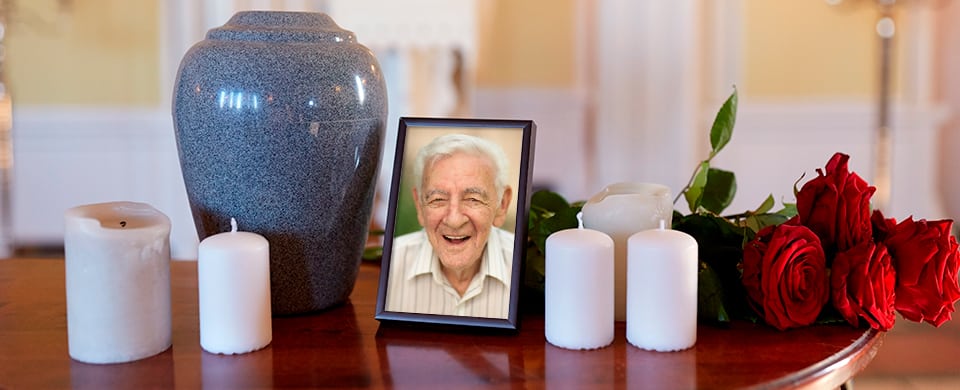
Cremation is the process by which the body is committed to a cremator — a specialist furnace that operates at temperatures of around 900°C. The process takes two to three hours. What remains afterwards are bone fragments, which are processed into the fine, pale grey powder known as ashes or cremated remains.
The ashes are placed in a container and returned to the family, usually within a few days of the service. Families may scatter them, bury them, keep them at home, or divide them — there are no legal restrictions on what you do with ashes in the UK, though you will need the landowner’s permission to scatter on private land.
What happens at the service
The cremation itself takes place after the service, once mourners have left — family and friends are not present during the cremation. What people attend is the service beforehand, which may take place in the crematorium’s own chapel, in a church, or in another venue before the coffin is transferred.
At the crematorium chapel, the coffin rests on a raised platform — a catafalque — at the front. At the end of the service, curtains close around the coffin as a symbol of farewell. For many families, this is the most emotional moment of the day. Knowing it is coming, and that it is brief, can help.
Crematorium services are typically allocated a 30 to 45 minute slot, after which the next family’s service begins. This timetable creates a gentle pressure that a graveside burial does not have. It is worth being clear with your celebrant or minister about timing — and building in a little extra if family members are travelling.
Witnessing the committal
In most cases, the curtains closing marks the end of the service for those attending. In rare circumstances, and at the discretion of the crematorium, one or two family members may be present for the physical committal — the moment the coffin enters the cremator. This must be arranged in advance and is uncommon, but it is an option worth asking about if it matters to the family.
Webcasting
Most crematoria now offer the option to webcast the service — a live stream accessible to friends and family who cannot attend in person. This has become standard at many venues since the pandemic and is worth requesting when you book. A link can be shared with those who are abroad, unwell, or unable to travel, so that the service can be witnessed by everyone who wants to be part of it.
Preparing for the cremation
Your funeral director will ask the family to provide clothing for the person to wear. Embalming is not required for cremation, though some families request it. Jewellery may be removed and returned to the family beforehand. Any device with a battery — a pacemaker, in particular — must be removed by a medical professional before the cremation, as it would pose a safety risk at high temperatures.
Personal items — letters, small mementos, cards — may go into the coffin, though some materials are unsuitable. Your funeral director will advise. The coffin itself is cremated with the person; it is not reused.
The ashes
Only one person is ever cremated at a time, and strict procedural controls ensure that the ashes returned to the family belong only to their loved one. Families sometimes ask about this — the answer is unequivocal.
The ashes are typically ready within a few days of the service. Some families collect them immediately; others leave it until they are ready. There is no rush. When the time comes, a scattering, a burial or a memorial event can be as simple or as considered as the family wishes — and a memorial card or small printed keepsake can mark that moment as meaningfully as the funeral itself.
Direct cremation
An increasing number of families choose direct cremation — a cremation that takes place without a funeral service beforehand. The body is collected, the cremation is carried out at an arranged time without mourners present, and the ashes are returned to the family. There is no ceremony at the crematorium. Any gathering or memorial takes place separately, at a time and location of the family’s choosing — a week later, a month later, or not at all.
Direct cremation is simpler, significantly less expensive than a traditional funeral, and for many families exactly right. It suits those who want to avoid the pressure of a formal public event, those whose loved one expressed a wish for no fuss, and those who want to mark the death privately. Roughly one in five funerals in the UK now takes this form, making it the fastest-growing funeral choice of the past decade.
A direct cremation does not preclude a meaningful memorial. Many families who choose this route hold a small gathering — at home, at a favourite place, or in a hired venue — where they share photographs, music and memories. A printed memorial booklet or a set of memorial cards can give that gathering the same considered quality as a more formal service.
You may also find our articles on traditional burial, green and woodland funerals and burial at sea useful when considering the options.
If you are planning an order of service for a cremation funeral, call us free on 0800 612 6484 or send us a message.