In this series, Funerals Explained, we look at what to expect from different types of funeral service. Here we focus on green burials and woodland funerals — a growing choice for families who want a farewell that is gentler on the environment and closer to the natural world.
What is a green or woodland funeral?
A green burial — sometimes called a woodland funeral or natural burial — is an environmentally considerate alternative to conventional cremation or burial. The aim is to allow the body to return to the earth as naturally as possible, with minimal impact on the surrounding land.
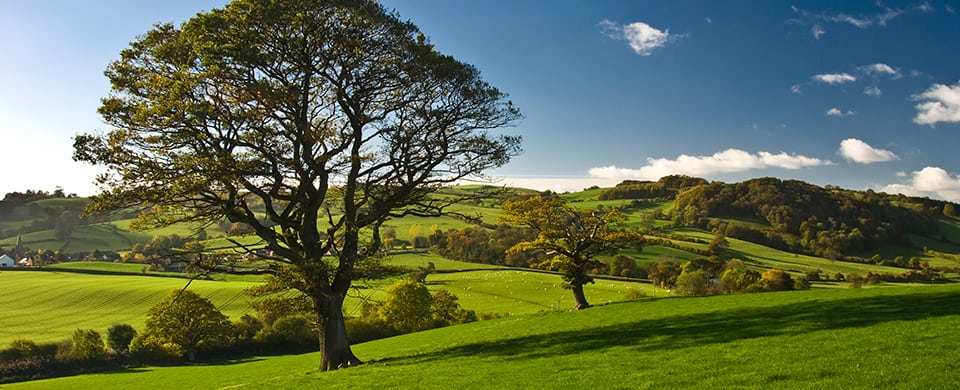
Instead of a conventional cemetery, burial takes place in a natural burial site — often a meadow, a woodland or a field managed with conservation in mind. Trees are sometimes planted above the burial site, and over time the land returns to natural landscape rather than being marked with a headstone.
Why families choose it
For many families, the environmental dimension is primary. Conventional cremation uses significant energy and produces CO₂ emissions; traditional burial involves embalming chemicals, hardwood coffins and concrete burial vaults. A green burial uses none of these. For someone who cared about the natural world — who gardened, who walked, who felt strongly about the environment — a burial that gives something back to the land rather than taking from it can feel like the most fitting farewell.
Others are drawn by the setting — a woodland glade, a wildflower meadow, a hillside with a view — and the atmosphere that comes with it. The simplicity and intimacy of a green burial, without the constraints of a crematorium’s timetable, gives families more space to say what they need to say.
What makes a burial “green”
A green burial follows specific principles to minimise environmental impact:
- Biodegradable coffin — typically wicker, bamboo, cardboard or recycled paper, with no metal fittings or chemical lacquers
- No embalming — the body is not chemically treated, allowing it to return to the earth naturally
- Natural clothing — only biodegradable fabrics; synthetic fibres, most shoes and metal jewellery are not suitable
- No permanent markers — conventional headstones are not used; some sites permit a simple wooden marker, a planted tree, or GPS recording of the location
Finding a natural burial site
There are now over 300 natural burial grounds across the UK. The Natural Death Centre maintains a comprehensive directory and can advise on sites by region. The quality and character of sites varies considerably — some are working farms with designated areas, others are managed specifically as nature reserves or wildflower meadows. It is worth visiting before making a decision.
Some families arrange burial on private land — this is legal provided the landowner’s consent is given, the site is at least 50 metres from any drinking water source and 10 metres from standing water, and the location is accurately recorded and registered with the Land Registry deeds. Your funeral director can advise on the process.
What the day looks like
A green burial can be accompanied by any style of service — religious, humanist or entirely informal. Many families gather at the graveside, perhaps in a woodland clearing, led by a humanist celebrant or by the family themselves. There is no requirement for a formal officiant. Music, readings, flowers and personal tributes can all be part of the day, within the site’s own guidelines.
Without the time pressure of a crematorium slot, services at natural burial grounds often feel unhurried and deeply personal. Families frequently comment that they had more space to breathe, to speak, and to grieve together than they had expected.
What happens afterwards
Different sites operate differently. Some plant a tree above each burial; others maintain the land as open meadow or managed woodland. Most sites offer GPS recording of the location so families can return and find the spot. It is worth asking the site operator about their long-term management plan and what visiting is like over the years — the answer varies considerably.
Cost
A green burial is generally less expensive than a conventional burial. Biodegradable coffins cost less than traditional hardwood alternatives; there are no crematorium fees; and many natural burial sites charge less for a plot than a conventional cemetery. Families who organise much of the service themselves can reduce costs further, though a funeral director can still be involved to provide support and practical help.
The order of service
If the service includes a formal gathering — at the graveside, at a nearby venue, or at a church or hall beforehand — an order of service is as relevant here as at any conventional funeral. A design that reflects the natural setting can be particularly fitting: botanical imagery, hand-drawn florals, a colour palette drawn from the woodland or the meadow. When the stationery matches the spirit of the day, it completes the picture.
You may also find our articles on traditional burial, cremation, burial at sea and humanist services useful when considering the options.
Call us free on 0800 612 6484 or send us a message to talk about an order of service for a green or woodland funeral.