Funerals are shaped by centuries of tradition. Many of the customs families follow today have roots stretching back hundreds of years — yet we rarely pause to ask where they came from or why they endured. Here is a look at some of the most familiar parts of a British funeral and the history behind them.
The obituary notice
The obituary — once published in local newspapers and now just as likely to appear on a funeral director’s website or a social media page — has been a way of marking a death publicly for centuries. In Britain, the tradition of the formal printed obituary dates to the 17th and 18th centuries. Over time the format has shifted: for a period, obituaries were written in verse; today they tend to be straightforward announcements, noting the funeral arrangements, whether the service is private, and where donations may be directed.
Why do we wear black?
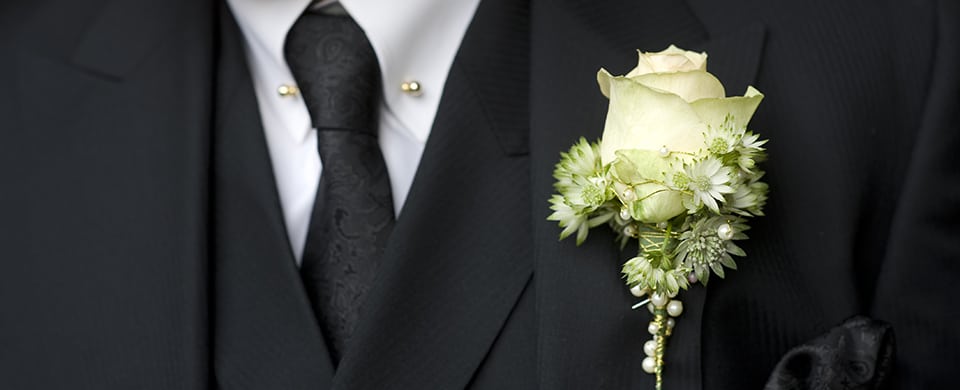
The tradition of mourning dress in black has been part of British life since at least the Elizabethan era. It reached its most visible height during the reign of Queen Victoria, who wore black for the remaining 40 years of her life following the death of Prince Albert in 1861. Her example set an expectation that widows and mourners would dress accordingly as a mark of respect — and the convention has persisted ever since.
Today, the tradition is softening. Many families now request a specific colour, or ask guests to wear something the person loved. If no guidance is given, dark and understated clothing remains the respectful default and always the safest choice if you are unsure.
Why is there a funeral procession?
Walking in procession to accompany the coffin is one of the oldest funeral customs in existence. In Roman times, professional mourners were hired to walk and wail — the wealthier the family, the more elaborate the procession. In Victorian Britain, the horse-drawn hearse became a centrepiece of public mourning.
Today, the procession is quiet and brief. Funeral directors often walk ahead of the hearse as it leaves their premises. In some towns, the cortège may pause at a place that held meaning for the person — a workplace, a pub, a stretch of road they loved. Members of the public will often stop and stand in silence as the hearse passes, a small act of respect that still carries real weight.
Who are the pallbearers?
Pallbearers — those who carry the coffin — take their name from the pall, the cloth draped over a coffin during a funeral. The role has been one of honour for centuries: in medieval England, bearers of high status would carry the coffin of a nobleman to mark the importance of the occasion.
Today, pallbearing is typically offered to close family members or friends as an act of final service. It is considered a privilege rather than an obligation. A funeral director will always have trained staff available to carry the coffin if the family prefers — or to support family members who take on the role.
What is a chapel of rest?
A chapel of rest is a quiet, private room within a funeral director’s premises where the deceased is laid in the days before the funeral. It gives family members the opportunity to spend time with their loved one, say a private goodbye, and begin to come to terms with the reality of the loss.
Whether to visit a chapel of rest is entirely a personal decision. For some families it brings comfort and closure; for others it does not feel right. There is no obligation either way, and your funeral director can discuss what is appropriate for your circumstances.
Why do we bring flowers?
Flowers have been placed with the dead since ancient times — archaeologists have found evidence of floral offerings in graves thousands of years old. In Britain, the tradition of sending flowers to a funeral is deeply embedded: wreaths and sprays are laid on the coffin, or displayed at the graveside, as a visible expression of love and respect.
In more recent decades, many families have begun asking guests to donate to a charity instead of — or alongside — sending flowers. Both are equally valid ways of marking the occasion. If the family has expressed a preference, follow their guidance; if none is given, a modest floral tribute remains a well-understood gesture.
Why do we have a wake?
The wake — held after the funeral, usually at the family home, a pub or a hired venue — has roots in Anglo-Saxon burial custom and became a cornerstone of Christian funeral practice in Britain. It served a practical purpose: the body was often watched over before burial to ensure death was genuine, and the gathering gave community members a chance to offer support.
Today, the wake is simply the gathering after the service — a chance for family and friends to share memories, look at photographs and be together. For many families it is the most human part of the day, where stories are told and laughter is heard alongside the tears.
The order of service
The printed order of service is one tradition that has grown rather than faded. Once a simple printed sheet, it has become a keepsake — designed around the person’s life, carrying their photographs and the details of the day. Many families keep their order of service for years. Some pass them down. A well-designed order of service is among the most personal and lasting things a family can give to everyone who attends.
You may also find our articles on traditional burial, humanist funerals and Catholic funeral services useful.
To talk about an order of service, call us free on 0800 612 6484 or send us a message.