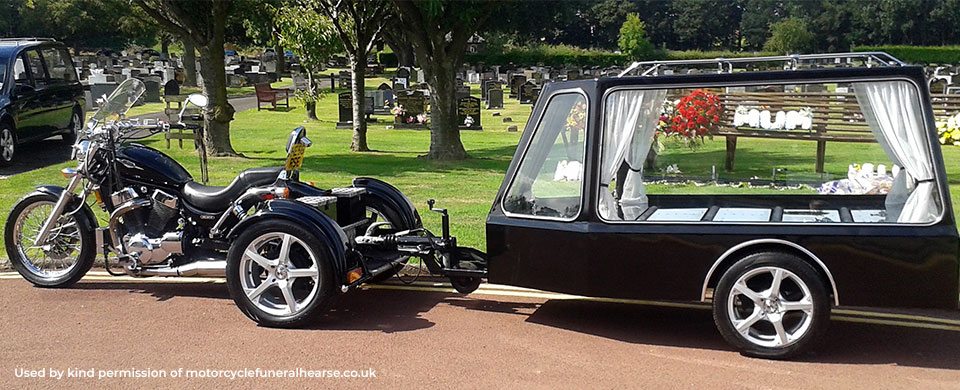
Planning a funeral is something most of us come to unexpectedly, with little time to prepare and a great deal to think about. The good news is that there is far more freedom than many families realise. A funeral director will manage the essential practicalities, but the shape of the service — what it looks and feels like — is entirely the family’s decision. Here are some of the ideas that families have found most meaningful.
Alternative transportation
The hearse is a long-established tradition, but it is not the only option. Motorcyclists often form an escort for someone who rode — sometimes offered by a local club as an act of generosity. A horse-drawn hearse creates a remarkable, unhurried occasion. Tractors, canal narrowboats and even buses have been used when the connection to the person made it the most fitting choice. Your funeral director can explore what is possible with you — the lead time and logistics vary, so raise it early.
A theme or colour
Asking guests to wear a particular colour — a favourite shade, the colours of a football club, something the person was known for wearing — is a gentle way of bringing personality into the room. A service for a lifelong cricket supporter where guests wore white. A farewell for someone who loved the sea where everything reflected blues and greens. A room full of colour, when the request comes from the right place, changes the atmosphere before anyone has spoken a word.
A guard of honour
A guard of honour at the entrance to the crematorium or church gives those present a role in the farewell. Sporting teams, work colleagues, former service colleagues and community groups have all formed guards of honour. Dogs have been brought along by the owners of rescue animals a person had rehomed. The image it creates — of all the people whose lives a single person touched, gathered together in one place — can be one of the most powerful moments of the day.
A tribute table or photograph display
A table near the entrance, arranged with photographs and objects from the person’s life, gives guests something to gather around before the service begins. A fishing rod. A gardening hat. A pair of walking boots. A favourite book. These objects say something that a eulogy cannot — they make the person present in the room before a word has been spoken. Families often find that guests spend longer around a tribute table than they expect, and that the conversations it starts carry on long after the service ends.
A music playlist to share
A Spotify or Apple Music playlist of the person’s favourite music — songs from across their life — can be shared as a QR code printed in the order of service. Guests can scan it as they leave and carry the music with them. Played at the wake, or listened to privately in the weeks that follow, a playlist curated with real knowledge of the person becomes a way of remembering them through sound. It is one of those simple ideas that costs nothing and means a great deal.
An alternative coffin
Coffins can be personalised more readily than most families know. A wicker or willow coffin has a natural, simple quality. Coffins can be painted, decorated with artwork, or printed with imagery that meant something to the person — a favourite landscape, a sporting design, a botanical pattern. Some families create hand-painted decoration themselves in the days before the funeral. Speak to your funeral director about what is available.
Something for guests to take home
Some families give guests a small token — a packet of forget-me-not seeds, a bookmark, a card carrying a favourite quote or a line from something they loved. It is an unexpected gesture that people remember. Forget-me-nots in particular feel right: easy to grow, persistent, and with a meaning that is built into their name.
A well-designed memorial card — something that carries a photograph and a personal message — serves the same purpose and lasts longer. When the memorial card matches the order of service in design, the two pieces together create a set that tells a consistent story about the person and the day.
Collecting memories at the wake
Inviting guests to bring a photograph or a small item that reminds them of the person, then collecting these at the wake with a handwritten note explaining each one, gives the family something to go through together in the days that follow. It is a way of gathering in the parts of a life that the family may not have known — contributions from work, from old friendships, from chapters of the person’s life that happened before the family entered it.
You may also find our articles on personalising a funeral and celebration of life services useful when thinking about the shape of the day.
If you would like to talk about an order of service or memorial cards that reflect the choices you are making, take a look at our design gallery for examples of what is possible, or call us free on 0800 612 6484 or send us a message.