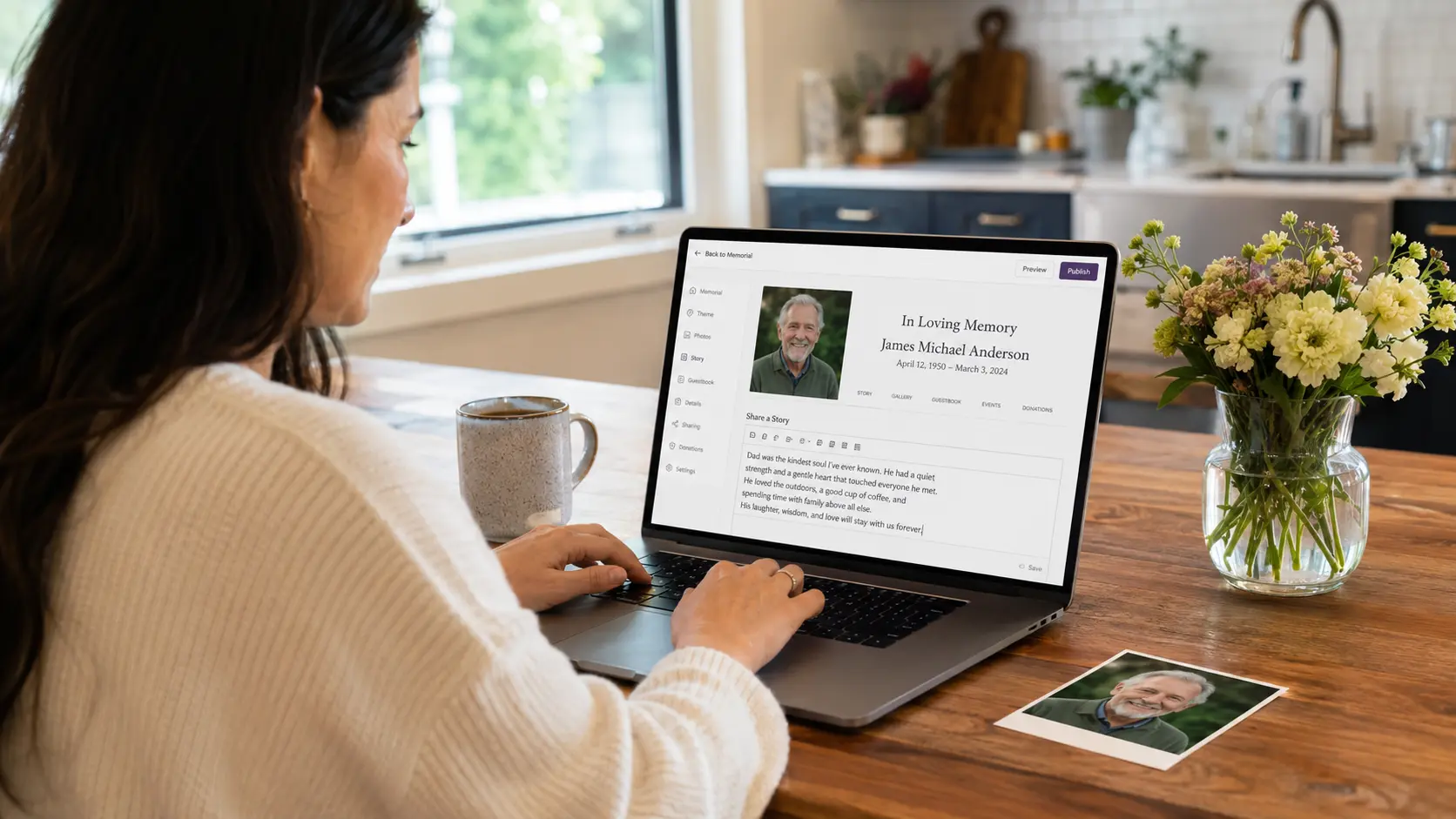
Families are more spread out than they once were. A death that touches people across the UK — or across the world — cannot be shared only through a service that a limited number of people can physically attend. An online memorial extends that gathering: a place where family and friends can contribute photographs, share memories and read tributes from others, regardless of where they are or when they visit.
This guide covers the main options available to families in the UK, what to think about when setting one up, and how a printed order of service or memorial card can work alongside it.
What an online memorial can do
At its best, an online memorial becomes a living record of the person — one that grows over time as people contribute. Friends who knew the person at different stages of their life often share aspects that even close family did not know: a colleague remembering an act of kindness, a childhood friend with a story from forty years ago. The memorial becomes more complete the more people contribute to it.
It can also be visited when the moment calls for it — on an anniversary, on a birthday, or simply on a quiet afternoon when someone wants to feel close to the person. Unlike a physical gathering, it is available whenever it is needed.
UK platforms worth considering
Much Loved (muchloved.com) is one of the most thoughtfully designed memorial platforms available in the UK. It offers a free base plan, allows families to create a funeral notice alongside the memorial page, and has an interface gentle enough for those who are less comfortable online. Donations to charity can be collected through the page. It is a well-established platform run by a UK charity.
Gone Too Soon (gonetosoon.org) is another well-regarded UK option with a slightly different approach to layout and features. It is worth spending a few minutes with both before choosing — the right platform for one family will not necessarily be right for another.
Facebook memorialisation is relevant if the person had an active Facebook account. On receipt of a death certificate, the account can be memorialised — frozen in place, with existing photographs, posts and connections remaining visible but no new posts made by anyone else. Facebook allows account holders to designate a legacy contact in advance: someone who can pin a tribute post and manage the memorialised account on the family’s behalf. If the family knows the person had a Facebook account, it is worth checking whether a legacy contact was designated, and whether the family wishes to pursue memorialisation.
What to include when you set one up
The strongest online memorials begin with a clear photograph and a short biography — enough for anyone arriving at the page to understand who the person was and why this memorial exists. From there, the page can include:
- A gallery of photographs across different stages of their life
- A timeline of significant moments
- An invitation for others to leave memories or tributes
- Details of any charitable fund set up in their name
- Information about the funeral service, if the page is being shared before or immediately after
Keep the opening content brief and let the contributions from others build the fuller picture over time. An online memorial that feels too complete too quickly can discourage people from adding their own memories.
Who should manage it, and how to share it
Designate one person — ideally someone comfortable online — to set up the page and act as administrator. They do not need to do all the writing; their role is to create the structure, invite contributions and moderate anything that needs moderation. Most platforms make administration straightforward.
Share the link through a family WhatsApp group, by email to the wider network, and — if it feels right — through the order of service or memorial card. A QR code printed on the order of service that links directly to the online memorial is a simple way to connect the two: guests at the service can scan it as they leave and find themselves immediately on the page where they can leave a memory. We can include a QR code on any order of service or memorial card we produce.
Print alongside digital
An online memorial and a printed order of service or memorial card serve different purposes — and both matter. The online memorial gathers memories over time and is available indefinitely to anyone with the link. The printed keepsake gives every person at the service something to hold that exists beyond a screen: something that can be kept in a wallet, placed on a mantelpiece, or handed to someone who could not be there.
Online platforms also carry a degree of impermanence that print does not. Platforms change, close or restructure over time. A beautifully designed order of service, printed on quality card, will still exist in a family’s memory box in thirty years.
The two work best together: digital for reach and ongoing contribution, print for permanence and for the physical presence of the day itself.
See also our guides to creating a memorial slideshow or legacy video and your digital legacy.
If you would like to talk about an order of service, memorial cards, or including a QR code to connect your printed stationery to an online memorial, call us free on 0800 612 6484 or send us a message.