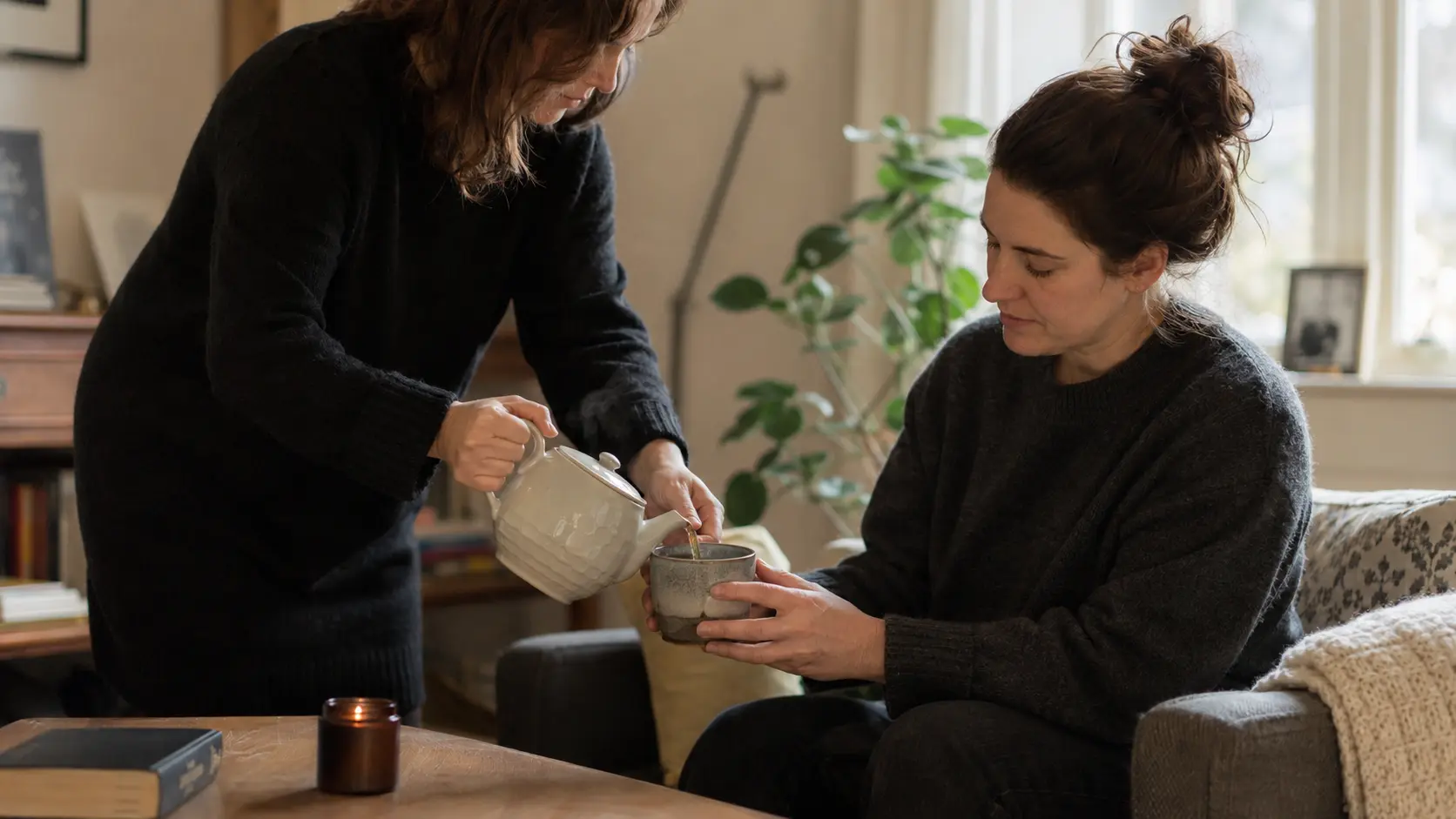
When someone close to you loses a person they love, most people feel the same combination of things: an instinct to help, and an uncertainty about what helping actually looks like. The fear of saying the wrong thing can lead to saying nothing at all — which tends to leave the bereaved person feeling more alone, not less.
There is no perfect formula for supporting someone through grief, but there are approaches that consistently make a difference and mistakes that are worth knowing about.
Show up — even when it is uncomfortable
The most important thing you can do is not disappear. Grief is isolating, and one of the most painful experiences for bereaved people is the way that friends and colleagues can withdraw — often out of awkwardness, sometimes out of genuine not-knowing-what-to-say.
You do not need the right words. If you are wondering how to put your support into words on paper first, our guide to what to write in a sympathy card may help.
A message that says “I have been thinking about you and did not want to stay silent” is more valuable than carefully worded sympathy that never gets sent. Showing up imperfectly is better than not showing up at all.
In the early days: practical help matters most
In the immediate aftermath of a death, bereaved people are often managing enormous practical demands — registering the death, contacting banks and utilities, organising the service — while simultaneously being in shock. The most useful support at this stage is concrete:
- Bring food, and do not wait to be asked
- Offer to make calls, manage email, or take on a specific task
- Help with children, pets, or transport
- Sit with them — not to talk, necessarily, but so they are not alone
Vague offers (“let me know if there’s anything I can do”) are well-meant but rarely acted on — bereaved people often cannot identify what they need, and asking for help requires energy they do not have. A specific offer is far easier to accept.
What to say — and what not to say
Some phrases, however kindly meant, tend not to help:
- “They had a good innings” — may be true, but minimises the loss
- “Everything happens for a reason” — grief does not work on philosophical terms
- “You need to be strong for the children / family” — puts an immediate burden on someone who is already carrying a great deal
- “I know how you feel” — grief is particular; even similar losses feel different
- “At least they are not suffering” — again, may be true, but tends to close conversation rather than open it
What tends to help is simpler: acknowledging what has happened, using the name of the person who has died, and asking questions that invite the bereaved person to talk if they want to. “Tell me about him” or “What are you finding hardest at the moment?” opens space rather than closing it.
In the months that follow
Grief does not end when the funeral is over. Many people find the weeks and months after the service harder than the immediate aftermath — the practical activity stops, the visitors stop coming, and the loss becomes more real, not less.
Staying in touch beyond the first few weeks is one of the most valuable things a friend can do. A message on an anniversary, a birthday, or a date that was significant to the person who died tells the bereaved person that the person they have lost is not forgotten.
Watch out for the dates that tend to be hard: the first Christmas, the first birthday without the person, the anniversary of the death. A card or a message on those days can make an enormous difference.
When grief becomes something more
Grief is a normal response to loss, but sometimes it becomes complicated — lasting longer than expected, interfering significantly with daily functioning, or taking the form of depression or anxiety. If you are concerned about someone you care for, gently encouraging them to speak to their GP is a reasonable step. Cruse Bereavement Support (cruse.org.uk) also offers counselling and a helpline.
You may also find our broader guide to grief and bereavement and our article on memory boxes useful — it covers the experience of grief and sources of support in more detail.
If you are helping to organise a funeral for someone close to you, our step-by-step planning guide covers the practical sequence, and we are always happy to talk through the order of service at whatever pace feels right.