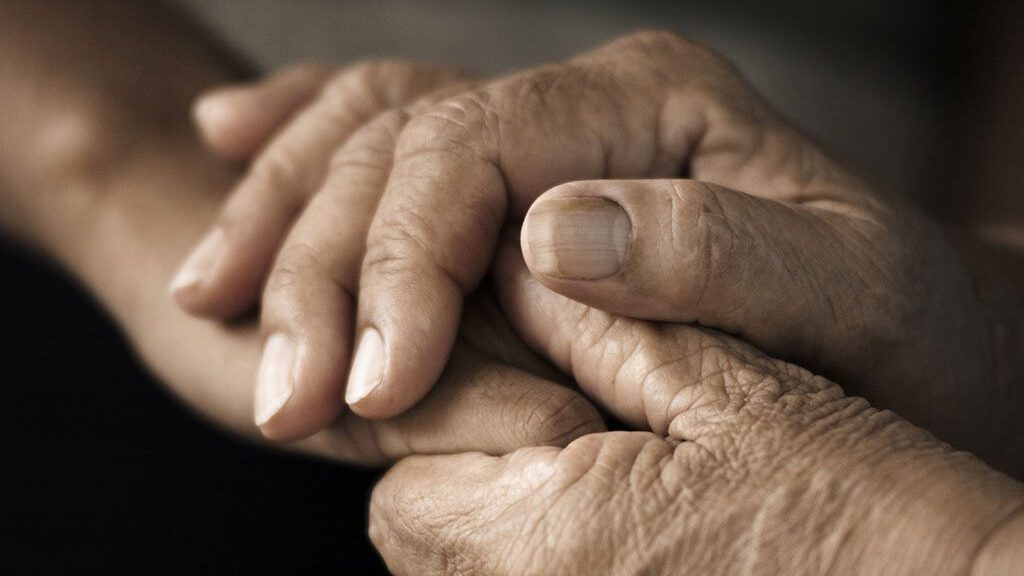
We have customers who still have their parents’ and grandparents’ orders of service — documents from funerals that took place decades ago, kept in a drawer or a memory box, come across occasionally and looked at again. A piece of paper that survived that long did so because it was worth keeping: something in it — a photograph, a line of text, a design that felt right — made it impossible to throw away.
That is what a funeral keepsake is. Not a souvenir, but a document that outlasts the day it was made for.
What gets kept and what gets discarded
Not everything handed out at a funeral survives. Orders of service printed on thin paper, with a generic design and a low-resolution photograph, tend not to be kept beyond the immediate aftermath. The object does not feel worth preserving, so it is not preserved. That is a loss — not of the piece of paper, but of the record it contained.
What gets kept is something that feels considered. Heavier card. A photograph that captures the person as they actually were. A design that reflects something about them — not a stock format, but something that could only have been made for that specific person. When an order of service has those qualities, people put it somewhere safe, and it stays there.
What a kept order of service contains
The value of an order of service as a keepsake is partly in what it records. It carries a photograph — often the one the family chose most carefully, the one that looks most like the person. It carries their name, their dates, the music that was played, the words that were read. In many cases it carries a brief biography: a life condensed into a few paragraphs that no single person at the service could have written alone, assembled from what everyone who loved the person knew collectively.
A colleague at the funeral might read that biography and learn something about the person’s childhood they never knew. A childhood friend might learn something about the person’s working life. That document — that particular combination of photograph, dates, biography and design — does not exist anywhere else. The order of service is often the only place it is all brought together.
Memorial cards as a companion keepsake
An order of service is not the only printed keepsake from a funeral. A memorial card — smaller, designed to be carried in a wallet or kept in a pocket book — serves a different but complementary purpose. Where the order of service is the record of the day, the memorial card is something personal: a photograph on one side, a poem or message on the other, something that can be slipped into a bag and come across months later when it is needed.
When both are designed together — the same photographs, the same palette, the same visual language — they form a set that belongs to each other. Families who achieve that have created something that functions as a complete record: a document of the day and a personal token to carry from it.
Why quality determines what survives
A keepsake that does not feel worth keeping will not be kept. This is the practical argument for quality in funeral stationery, separate from any question of aesthetics: the card weight, the print finish, the photograph resolution, the design — these are the things that determine whether the object survives the months and years after the funeral, or whether it quietly disappears.
We print all orders of service and memorial cards on 350gsm silk-finish card — substantially heavier than most standard print services use. The finish gives photographs genuine depth. The weight gives the object a presence in the hand. These are not luxury details. They are the difference between something that gets kept and something that does not.
Designed around the person
At Fitting Farewell, every order of service and memorial card is designed around the person — from the first conversation about the person to the proof the family approves. The design reflects the individual, not a template. The photographs are chosen and retouched with care. The result is something that could only have been made for that specific person — and that is precisely why it is worth keeping.
You may also find our families’ own words about their experience, and our articles on what a funeral order of service is and why bespoke design beats a template useful.
Call us free on 0800 612 6484 or send us a message to talk about what you have in mind.